OUTDOOR GATHERING PERFORMANCE
Your Property May Already Contain Its Next Opportunity.
Important outdoor gathering spaces can hold unrealized experiential, operational, and property value. bY couTure helps ownership, development, design, and operations define what these spaces must accomplish before architectural decisions are made.
THE PERFORMANCE GAP
A Valuable Space Does Not Automatically Become a High-Performing Space.
An outdoor environment may be beautiful, well located, and meaningful to the property while still falling short of what people, operations, and the property need from it.
Existing Potential
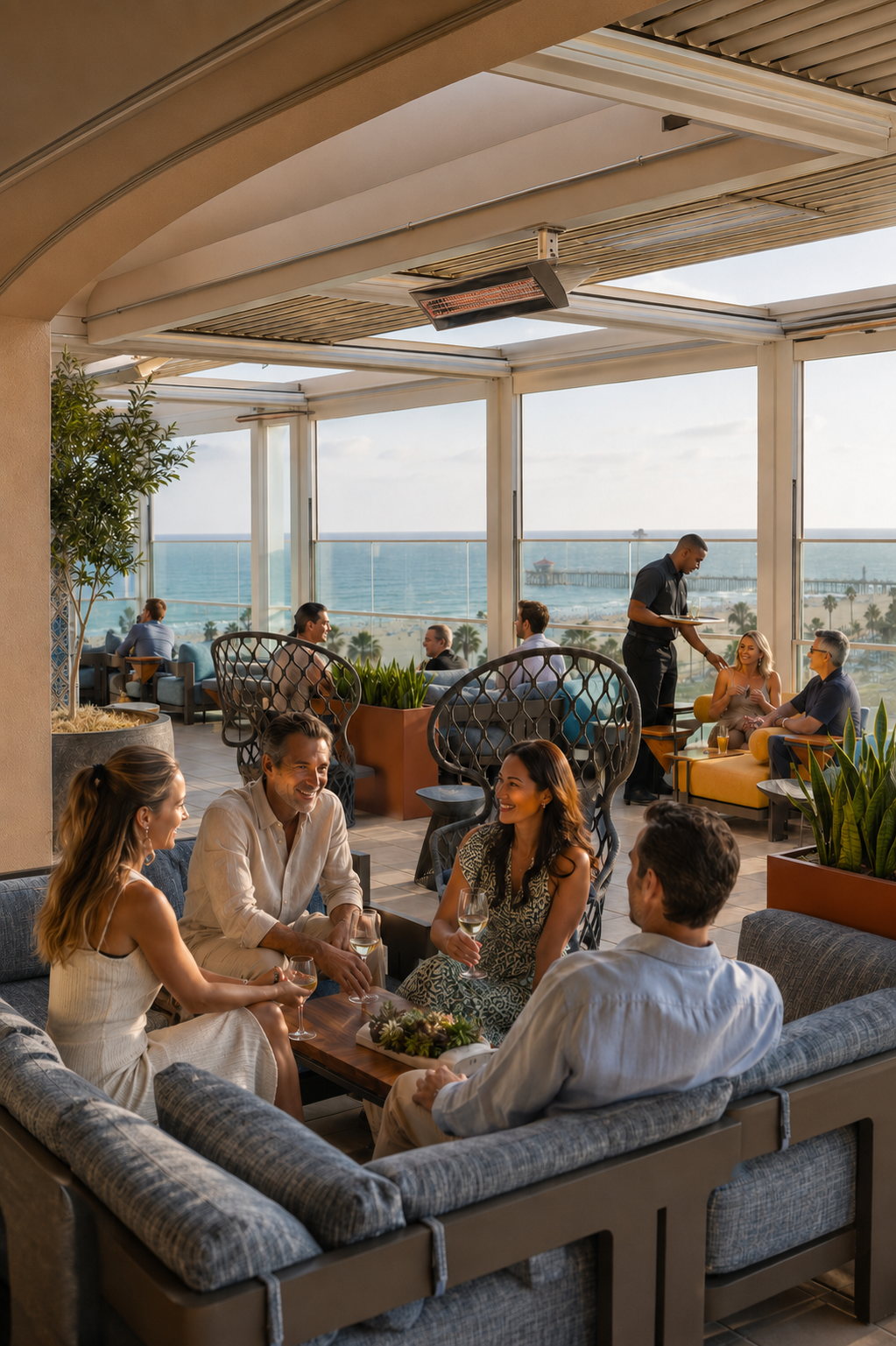
A Space People Want to Use
The location, atmosphere, views, identity, or social importance already give the space a meaningful role within the property.
Limiting Conditions
Conditions the Space Cannot Manage
- Heat and solar exposure
- Cold, wind, and rain
- Changing dayparts and seasons
- Operational uncertainty
- Inflexible physical conditions
The Result
A Gap Between Potential and Performance
Use becomes inconsistent, operations become cautious, and an important property asset produces less experiential, operational, and financial value than it may be capable of supporting.
THE GOVERNING QUESTION
What must this space be capable of doing for people, operations, and the property—not only under ideal conditions, but across changing conditions, dayparts, and seasons?
THE EXISTING ASSET
The Opportunity May Already Be Part of the Property.
The outdoor spaces people naturally choose to gather in can be among a property’s most recognizable—and underrealized—assets.
These spaces often already possess the qualities that are hardest to create: a meaningful location, an established connection to the property, and a reason people want to be there. Yet changing conditions, limited adaptability, and operational uncertainty can prevent them from performing as dependably as the property requires.
Recognizing an Outdoor Signature Space as an existing property asset changes the starting point. The question is no longer simply what should be built, but what greater experiential, operational, and property value the space may be capable of supporting.
Rooftops Courtyards Terraces Pool Decks Dining Arrival Events
Explore Our Experience
THE RESPONSIBILITY GAP
Outdoor Spaces Influence the Entire Property. Yet No Discipline Is Responsible for Their Performance.
Ownership, development, design, and operations each shape part of the outdoor environment. But responsibility is often divided before anyone defines how the space must perform as a whole.
MANY DISCIPLINES CONTRIBUTE
Ownership
Defines investment priorities, financial objectives, and the long-term expectations placed on the property.
Development
Coordinates scope, capital, schedule, and the broader development strategy surrounding the space.
Design
Shapes architecture, identity, material expression, circulation, and the relationship between indoor and outdoor environments.
Operations
Manages staffing, service, comfort, programming, maintenance, and the daily realities of activating the space.
THE UNASSIGNED RESPONSIBILITY
Who is responsible for defining how the entire space must perform?
PERFORMANCE CROSSES EVERY BOUNDARY
- Experience Will people choose the space, remain comfortable, and remember it?
- Operations Can the space be activated confidently across changing conditions?
- Financial Performance Can the asset support more dependable use, programming, and revenue?
- Property Value Will the space strengthen identity, differentiation, and long-term value?
THE MISSING STARTING POINT
Before architecture is selected, someone must accept responsibility for defining the gathering performance the space is expected to achieve.
GATHERING PERFORMANCE
Define the Responsibility Before the Solution.
Gathering Performance defines what an outdoor gathering space must accomplish for the people who use it, the teams who operate it, and the property that depends upon it—before architectural decisions are made.
THE GOVERNING QUESTION
What must this space accomplish for the people who use it and the property that depends upon it?
Attract People
Give people a meaningful reason to choose the space through location, atmosphere, identity, views, programming, and connection to the property.
Choice
Support the Experience
Sustain comfort, connection, and the intended experience as conditions, dayparts, seasons, and patterns of use change.
Experience
Enable Operations
Help teams activate, serve, program, adapt, and maintain the space with greater confidence and less operational uncertainty.
Dependability
Advance the Property
Strengthen financial performance, property identity, market differentiation, and the long-term value of an existing asset.
Property Value
FIRST
Define the required performance.
THEN
Determine the architecture capable of supporting it.
THE STARTING POINT
The solution should follow the responsibility—not define it.
THE bY COUTURE APPROACH
Experience Before Technology.
bY couTure begins with the people, operations, and property objectives the space must support. Architecture and technology enter only after the required Gathering Performance has been defined.
THE GOVERNING PRINCIPLE
The objective is not to place a product within an outdoor space. It is to determine what the space must become capable of doing.
RECOGNIZE
Understand the Opportunity
Identify the space’s existing importance, unrealized potential, limiting conditions, and intended role within the property.
DEFINE
Establish the Required Performance
Define what the environment must accomplish for its users, operators, and property across changing conditions, dayparts, and seasons.
ALIGN
Coordinate the Whole Environment
Align experience, operations, architecture, environmental control, and investment expectations around one performance strategy.
DETERMINE
Select the Supporting Architecture
Determine the architectural systems, adaptability, and implementation path capable of supporting the defined responsibility.
REPRESENTATIVE EXPERIENCE
See How the Discipline Applies
Explore the markets, property conditions, and outdoor gathering environments that shape the work.
Explore ExperienceCONTINUE THE THINKING
Examine the Ideas Behind the Practice
Continue into the frameworks, executive questions, observations, and research shaping Gathering Performance.
Explore InsightsA DIFFERENT STARTING POINT
Begin with the performance the property needs. Let the solution follow.
EXECUTIVE ASSESSMENT
Begin With the Opportunity Already Within the Property.
The Executive Assessment examines an existing or planned outdoor gathering space as a property asset—clarifying what it must accomplish, what may be limiting its performance, and where a more adaptive strategy may create value.
Explore the Executive AssessmentTHE ASSESSMENT CONSIDERS
-
Property Opportunity
The role the space could play within the broader property, guest experience, operating model, and investment strategy.
-
Gathering Performance
What the environment must accomplish for the people who use it and the teams responsible for operating it.
-
Performance Constraints
The environmental, architectural, operational, and experiential conditions limiting more dependable use.
-
Strategic Direction
The priorities, principles, and next decisions required before a responsible architectural solution can be determined.